Your air conditioner works hard to keep your home comfortable, especially during the hottest months of the year. While many homeowners focus on the thermostat or outdoor unit, one of the most important components of the entire system is surprisingly simple: the air filter. A clean filter helps maintain healthy airflow, improves indoor air quality, lowers energy consumption, and helps your HVAC system perform at its best. Unfortunately, it is also one of the most commonly overlooked parts of routine HVAC care.
Learning how to clean air conditioner filter components correctly is an important part of AC preventative maintenance. Regular filter care helps your air conditioner perform more efficiently while extending the life of the system. Chills Air Conditioning encourages homeowners to include filter maintenance as part of their regular home maintenance routine to improve comfort and avoid unnecessary wear on their equipment.
Why Your AC Filter Is So Important
The primary job of an AC filter is to capture airborne particles before they enter the HVAC system. Dust, pollen, pet dander, lint, mold spores, and other contaminants pass through your home’s air every day. Without a filter, these particles would accumulate on sensitive HVAC components, reducing efficiency and potentially causing expensive damage.
A clean filter offers several important benefits, including:
- Improved indoor air quality
- Better airflow throughout the home
- Reduced energy consumption
- Less wear on HVAC components
- More consistent indoor temperatures
- Longer equipment lifespan
Because filters collect debris continuously, they eventually become clogged. Once that happens, airflow becomes restricted, forcing the air conditioner to work harder than necessary.
Can Every AC Filter Be Cleaned?
Before discussing how to clean ac filter components, it is important to understand that not every filter is reusable.
Most residential filters fall into one of two categories:
Disposable Filters
Disposable filters are designed for one-time use. Once they become dirty, they should be replaced rather than cleaned. Attempting to wash disposable filters can damage the filter material and reduce its ability to capture airborne particles.
Washable or Reusable Filters
Reusable filters are specifically designed to be cleaned and reinstalled multiple times. These filters are often made from durable materials that can withstand gentle washing.
Always check your manufacturer’s recommendations before cleaning any filter.
How Often Should You Clean Your AC Filter?
One of the most common homeowner questions is how often should you clean your ac filter.
The answer depends on several factors, including:
- Whether the filter is reusable
- Number of occupants
- Presence of pets
- Allergy concerns
- Local air quality
- Construction or remodeling activity
- How frequently the HVAC system operates
As a general guideline, reusable filters should be inspected every month and cleaned whenever noticeable dust accumulation appears.
Homes with pets or allergy sufferers often require more frequent cleaning.
Understanding how often should you clean your AC filter helps maintain consistent cooling performance and keeps your HVAC system operating more efficiently.
Signs Your AC Filter Needs Cleaning
Even if you follow a regular schedule, certain warning signs indicate that your filter needs attention sooner.
Watch for:
- Reduced airflow from vents
- Rooms taking longer to cool
- Increased dust around the home
- Rising utility bills
- More frequent allergy symptoms
- Visible dirt on the filter
- HVAC system running longer than usual
Ignoring these warning signs allows dirt to continue accumulating, reducing overall system efficiency.
Tools You’ll Need
Fortunately, ac filter cleaning requires very few supplies.
Most homeowners only need:
- Vacuum cleaner with brush attachment
- Garden hose or sink sprayer
- Mild dish soap
- Soft brush
- Clean towel
- Protective gloves
Avoid harsh chemicals or pressure washers, as these can damage reusable filters.
Step 1: Turn Off the HVAC System
Safety should always come first. Before removing the filter, turn off your air conditioner at the thermostat. This prevents the system from circulating unfiltered air while the filter is removed and also protects the equipment while you work.
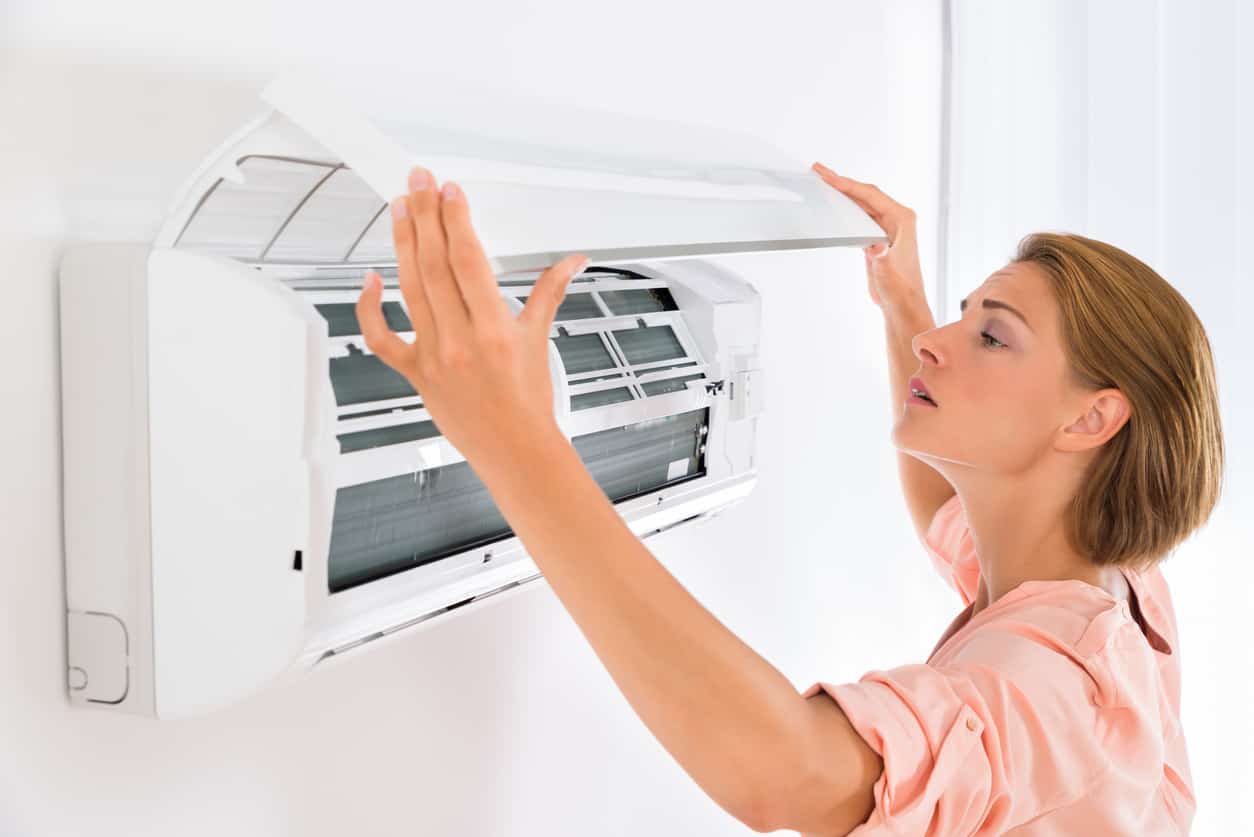
Step 2: Locate the Air Filter
Most residential filters are located behind the return air grille, inside the air handler, near the furnace, or within the return duct. If you are unsure where yours is located, consult your owner’s manual.
Carefully slide the filter out while noting the direction of the airflow arrows printed on the frame. These arrows indicate the correct installation direction and will help you reinstall the filter properly later.
Step 3: Inspect the Filter
Before washing the filter, examine it closely for signs of damage or excessive buildup. Look for:
- Heavy dust accumulation
- Tears in the filter material
- Bent or damaged frames
- Mold or mildew growth
- Excessive wear
If the filter shows signs of damage, replacing it is usually the better option. Cleaning cannot restore torn or worn filter media.
Step 4: Remove Loose Dust
Before washing the filter, remove as much loose dust and surface debris as possible. Use a vacuum cleaner with a soft brush attachment and gently clean both sides of the filter. This step prevents larger particles from becoming embedded in the filter material once water is introduced and makes the washing process more effective.
Take care not to press too hard with the vacuum attachment, especially if the filter material appears delicate. The goal is to lift away loose buildup without bending the frame or damaging the filter surface.
Step 5: Wash the Filter
Once the loose dust has been removed, rinse the filter with lukewarm water. Whenever possible, direct the water from the cleaner side toward the dirtier side so that trapped particles are pushed out rather than forced deeper into the filter material.
If the filter has stubborn dirt or buildup, add a small amount of mild dish soap and use a soft brush to loosen the debris gently. Avoid harsh chemicals, abrasive brushes, or aggressive scrubbing, as these methods can damage the filter and reduce its effectiveness. For homeowners wondering about the best way to clean AC filter components, gentle washing is usually safer and more effective than using strong cleaners or excessive pressure.
Step 6: Rinse Thoroughly
After washing, rinse both sides of the filter carefully until the water runs clear. Make sure all soap, loosened dust, and remaining debris have been removed before moving on to the drying stage.
Soap residue should never be left on the filter because it can attract additional dust once the system begins operating again. A thorough rinse helps ensure the filter is clean and ready for safe reuse.
Step 7: Allow the Filter to Dry Completely
Never reinstall a filter while it is still wet or even slightly damp. Moisture trapped inside the HVAC system can create conditions that encourage mold, mildew, and unpleasant odors.
Place the filter on a clean towel in a well-ventilated area and allow it to air dry naturally. Depending on the filter material, indoor humidity, and airflow in the room, the drying process may take several hours. Avoid using a hair dryer, heater, or other direct heat source, as excessive heat may warp the frame or damage the filter material.
Step 8: Reinstall the Filter
Once the filter is completely dry, slide it carefully back into its original position. Check the airflow arrows printed on the frame and make sure they point in the correct direction, usually toward the air handler or blower.
Installing the filter backward can restrict airflow and reduce filtration efficiency. After confirming that the filter is seated securely, restore power at the thermostat and allow the system to resume normal operation.
Common Mistakes During AC Filter Cleaning
Although AC filter cleaning is relatively simple, several common mistakes can reduce its effectiveness or even damage the filter.
Using High-Pressure Water
Pressure washers or strong spray nozzles may seem like a quick solution, but they can damage reusable filter material. Gentle water pressure is more than enough to remove dirt without harming the filter.
Reinstalling the Filter While It’s Wet
Reinstalling the filter before it has fully dried is a common mistake that can reduce its effectiveness. Once the filter has completely air dried, it can be safely reinstalled without introducing unnecessary moisture into the HVAC system.
Cleaning Disposable Filters
Not every AC filter is washable. Disposable filters are designed for one-time use and should always be replaced instead of cleaned. Washing them weakens the filter material and reduces their ability to trap airborne particles.
Forgetting the Airflow Direction
Installing the filter backward is an easy mistake to make, but it can reduce airflow and overall system efficiency. Before restarting your HVAC system, simply double-check that the filter is positioned correctly.
How Dirty Filters Affect Your HVAC System
Many homeowners underestimate just how much a clogged filter can affect the performance of their HVAC system.
Restricted airflow forces the blower motor to work harder while reducing cooling performance.
Over time, dirty filters can contribute to:
- Higher electricity bills
- Frozen evaporator coils
- Reduced airflow
- Uneven temperatures
- Increased equipment wear
- Shortened HVAC lifespan
Knowing how to clean AC filter components helps prevent these issues before they develop into expensive repairs.
The Connection Between Filters and Indoor Air Quality
While protecting HVAC equipment is one of their primary functions, air filters also play an important role in improving indoor air quality.
They also help improve indoor air quality by capturing airborne contaminants before they circulate through your home.
Clean filters reduce exposure to:
- Dust
- Pet dander
- Pollen
- Mold spores
- Lint
- Other airborne particles
For allergy sufferers, maintaining clean filters can contribute to a healthier indoor environment.
Should You Upgrade Your Filter?
Some homeowners wonder whether installing a higher-efficiency filter will automatically improve their HVAC system. While filters with higher MERV ratings can capture smaller airborne particles like dust, pollen, and pet dander, they may also restrict airflow if your system is not designed for them.
Before upgrading your filter, it’s a good idea to consult an HVAC professional to ensure compatibility with your equipment. The right filter should balance effective air filtration with the airflow your HVAC system was designed to handle. Choosing the correct filter helps maintain reliable performance without restricting circulation.
When Cleaning Isn’t Enough
Cleaning can help extend the life of a washable filter, but it cannot repair damage. If you notice tears, a bent frame, persistent odors, mold growth, permanent discoloration, or worn filter material, it is usually time to replace the filter rather than clean it again.
Even reusable filters have a limited service life and will eventually lose their effectiveness. Replacing a worn or damaged filter helps maintain proper airflow, supports better indoor air quality, and allows your HVAC system to continue operating efficiently.
Additional Ways to Keep Your HVAC System Clean
Filter maintenance works best when combined with other preventive care.
Homeowners should also:
- Keep supply and return vents unobstructed
- Schedule annual HVAC inspections
- Clean around indoor equipment
- Replace disposable filters on schedule
- Keep the outdoor condenser free of debris
- Maintain proper humidity levels indoors
Together, these simple maintenance habits help support reliable system performance and can reduce the likelihood of unnecessary repairs over time.
The Benefits of Regular Filter Maintenance
Making filter maintenance part of your routine can help your HVAC system perform more efficiently throughout the year. A clean filter supports steady airflow, helps keep energy costs under control, and reduces unnecessary wear on important system components.
Best of all, inspecting your filter only takes a few minutes each month. That small investment of time can help prevent larger maintenance issues and keep your air conditioner operating reliably when you need it most.
Keep Your HVAC System Running Efficiently
Your AC filter may be one of the smallest components in your HVAC system, but it has a major impact on comfort, efficiency, and equipment longevity. Learning how to clean air conditioner filter components properly and understanding the best way to clean AC filter materials can help improve overall system performance, lower operating costs, and protect your HVAC investment for years to come.
Routine inspections, proper cleaning techniques, and replacing worn filters when necessary can help your HVAC system continue operating efficiently for years to come. If you are unsure whether your filter should be cleaned or replaced, or if your air conditioner continues experiencing airflow problems despite regular maintenance, Chills Air Conditioning can evaluate your system and recommend the right solution for your home.