Indoor air affects how comfortable a home feels every day, yet air quality often receives less attention than temperature or humidity. Dust, pollen, pet dander, moisture, odors, particles, and other contaminants may circulate through indoor spaces without being immediately visible. When homeowners notice persistent dust, unusual smells, excess humidity, or changes in comfort, understanding what is happening inside the home becomes important.
An indoor air quality assessment provides a structured way to evaluate conditions that may be affecting the air inside a property. Depending on the situation, an assessment may examine ventilation, filtration, humidity, HVAC performance, possible pollutant sources, and other factors related to indoor conditions. Chills Air Conditioning helps homeowners understand HVAC-related air quality concerns and determine which indoor air quality services are appropriate for their homes.
What Is an Indoor Air Quality Assessment?
An indoor air quality assessment is an evaluation of the conditions and systems that influence the air within a home or building. Rather than focusing on a single potential problem, the assessment looks at multiple factors that may contribute to poor indoor conditions.
The process may include an inspection of HVAC equipment, air filters, ventilation, humidity levels, airflow, ductwork, and visible signs of moisture or contamination. Information from homeowners also matters. Persistent odors, excessive dust, rooms that feel humid, or concerns that appear only when the HVAC system operates may provide useful clues.
The goal is to develop a clearer picture of the indoor environment and identify areas that deserve further attention.
Why Indoor Air Quality Matters
People spend a significant amount of time indoors, so the quality of the indoor environment deserves attention. Airborne particles, excess humidity, poor ventilation, and inadequate filtration may affect comfort and contribute to stale or unpleasant indoor conditions.
HVAC systems play an important role because they circulate air throughout the property. A dirty filter, airflow restriction, moisture problem, or ventilation issue may influence multiple rooms rather than remaining isolated in one area.
Assessing these conditions also helps homeowners avoid guessing about the source of a problem. Instead of immediately purchasing a new filter, air cleaner, or other product, an evaluation helps determine which factors are relevant to the home.
What Does an Indoor Air Quality Assessment Include?
The exact process depends on the property and the concerns being investigated. There is no single procedure that applies to every home. However, several areas commonly receive attention during an evaluation.
HVAC System and Filter Inspection
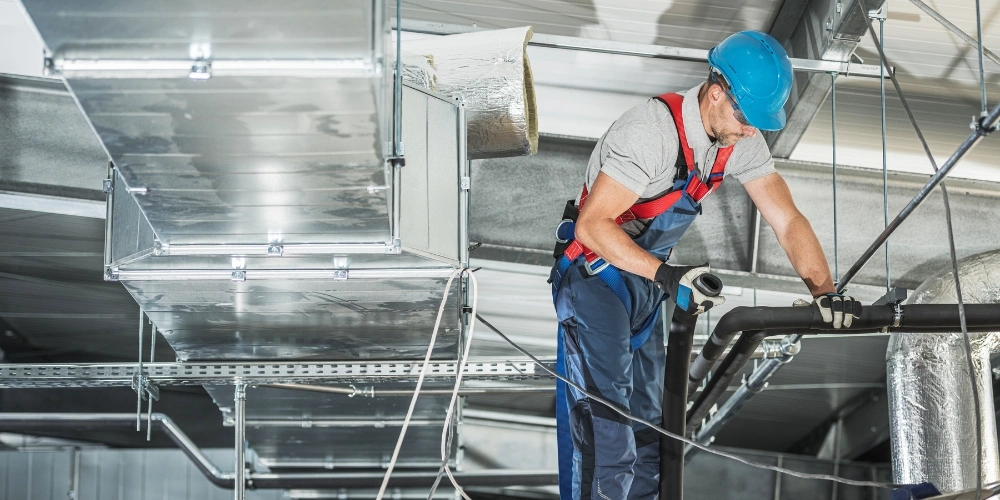
The HVAC system is an important starting point because conditioned air passes through it before circulating throughout the home. An inspection may look at the condition of the air filter, evaporator coil, air handler, drain system, and other accessible components.
A heavily loaded filter may restrict airflow, while dirt or moisture inside HVAC equipment may affect system performance and indoor conditions. The type of filter also matters because filtration needs should be balanced with the airflow requirements of the equipment.
Ventilation and Airflow
Proper ventilation helps exchange indoor and outdoor air while airflow distributes conditioned air throughout the property. Problems in either area may contribute to stuffiness, odors, temperature differences, or inconsistent humidity.
An assessment may consider whether supply and return vents are obstructed, whether airflow appears balanced between rooms, and whether the HVAC system is circulating air effectively. In some situations, ductwork or ventilation design may deserve closer inspection.
Humidity and Moisture
Humidity has a major influence on indoor comfort. Excess moisture can make a home feel warmer and create conditions where unwanted microbial growth is more likely to develop.
During an assessment, technicians may look for signs of condensation, drainage problems, water around HVAC equipment, or unusually humid areas. Identifying the source of excess moisture is more useful than addressing only the symptoms.
What Is on an Indoor Air Quality Assessment Checklist?
An indoor air quality assessment checklist helps organize the inspection so important areas are not overlooked. The exact checklist varies based on the property, HVAC equipment, and reason for the evaluation.
Typical areas of review may include HVAC equipment condition, filters, visible ductwork, ventilation, airflow, humidity, moisture, odors, and potential sources of airborne particles. Technicians may also ask homeowners when the problem occurs, which rooms are affected, and whether conditions change when heating or cooling equipment operates.
A checklist does not automatically diagnose every air quality concern. Instead, it provides a systematic starting point for identifying conditions that may require cleaning, repair, additional evaluation, or more specific testing.
How Is Indoor Air Quality Testing Different?
An assessment and indoor air quality testing are related, but the terms do not always describe the same process. An assessment generally involves evaluating the property, HVAC system, ventilation, moisture, and other conditions that influence indoor air.
Testing refers more specifically to measuring selected factors or collecting samples when appropriate. The type of testing depends on the concern being investigated. There is no single test that measures every possible indoor contaminant or identifies every potential source.
For this reason, testing should have a clear purpose. Gathering measurements without understanding the property or the suspected problem may produce information that is difficult to interpret.
Understanding Indoor Air Quality Analysis
After information has been collected, indoor air quality analysis involves considering the findings together rather than treating each observation separately. For example, excess humidity may relate to HVAC operation, drainage, ventilation, building conditions, or a combination of factors.
The same principle applies to dust. Excessive dust does not automatically mean the home needs a stronger filter. Air leaks, duct conditions, filter fit, household activities, and outdoor particles may all contribute.
A useful analysis connects the symptoms homeowners report with observations from the HVAC system and indoor environment. This approach helps identify practical next steps instead of relying on assumptions.
Signs an Assessment May Be Worth Considering
Some indoor air concerns are obvious, while others develop gradually. Homeowners may become accustomed to conditions that have changed slowly over time.
Persistent odors, unusual humidity, excessive dust, visible moisture around HVAC equipment, or recurring comfort problems may justify a closer evaluation. An assessment may also be useful after significant renovations, water-related problems, HVAC modifications, or changes in how a property is used.
An indoor air quality assessment checklist is especially useful when several concerns appear at the same time. Looking at the home as a connected system may reveal relationships that are easy to miss when each symptom is considered separately.
What Happens After the Assessment?
The next step depends entirely on what the evaluation finds. Some homes may need relatively simple changes, such as replacing an unsuitable filter, improving HVAC maintenance, clearing airflow obstructions, or addressing a drainage issue.
Other properties may require closer inspection of ductwork, ventilation, humidity control, or specific HVAC components. If a concern falls outside the scope of an HVAC evaluation, additional specialized assessment may be appropriate.
Indoor air quality testing may also be considered when there is a specific reason to measure particular conditions. The important point is that recommendations should follow the findings rather than starting with a predetermined product or solution.
How HVAC Maintenance Supports Indoor Air Quality
Routine HVAC maintenance contributes to cleaner and more consistent indoor conditions. Filters need regular attention, coils should remain clean, condensate systems need proper drainage, and airflow should remain within the requirements of the equipment.
Maintenance also provides an opportunity to identify moisture, dirt buildup, damaged components, or airflow concerns before they become more noticeable. While maintenance does not address every possible indoor pollutant, it helps keep the heating and cooling system from contributing unnecessarily to air quality problems.
Homeowners should also follow the filter recommendations for their specific equipment rather than automatically choosing the highest-rated filter available. A filter that creates excessive resistance may negatively affect system airflow.
Choosing Solutions Based on the Findings
Indoor air quality products vary widely, and no single solution addresses every concern. Filtration, ventilation, humidity management, HVAC cleaning, and equipment repairs solve different types of problems.
This is why indoor air quality analysis should come before major changes are made. If excess humidity is the main concern, improving filtration alone will not address the source. Likewise, installing additional equipment may provide little value if the underlying problem is a clogged filter, drainage issue, or airflow restriction.
A targeted approach helps homeowners focus on improvements that address conditions found in their own property.
Creating a Healthier and More Comfortable Indoor Environment
Indoor air quality involves more than removing visible dust. Ventilation, humidity, filtration, HVAC cleanliness, airflow, and conditions within the property all influence how indoor spaces feel and how effectively the heating and cooling system operates.
A thorough evaluation helps organize these factors and provides a clearer understanding of what may be contributing to a specific concern. Rather than relying on assumptions, homeowners receive information they can use to decide which improvements deserve attention.
Chills Air Conditioning helps homeowners evaluate HVAC-related indoor air concerns and identify practical steps for improving comfort, airflow, filtration, and system performance. With the right assessment and recommendations, homeowners can make informed decisions about maintaining a cleaner and more comfortable indoor environment.